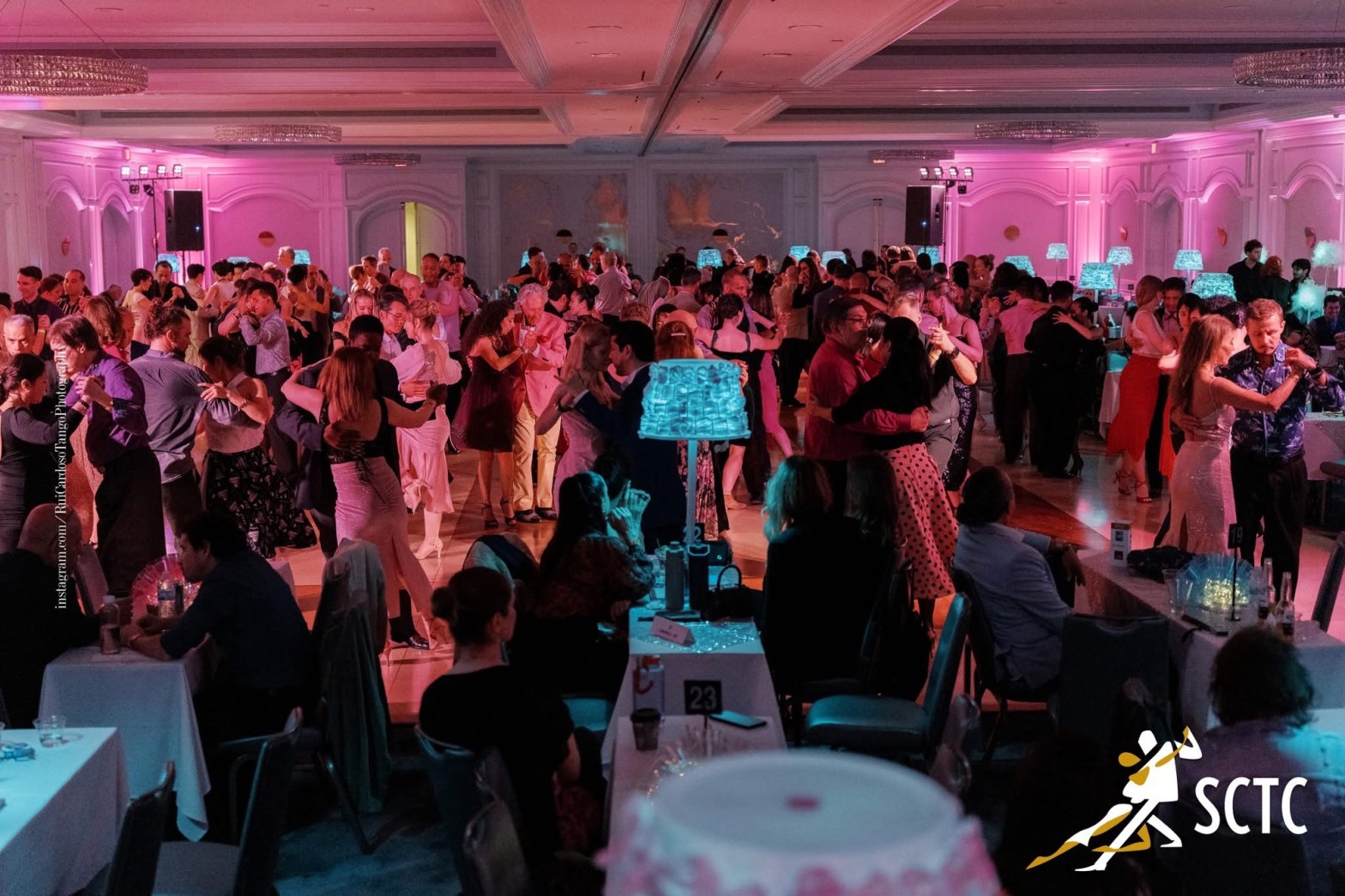
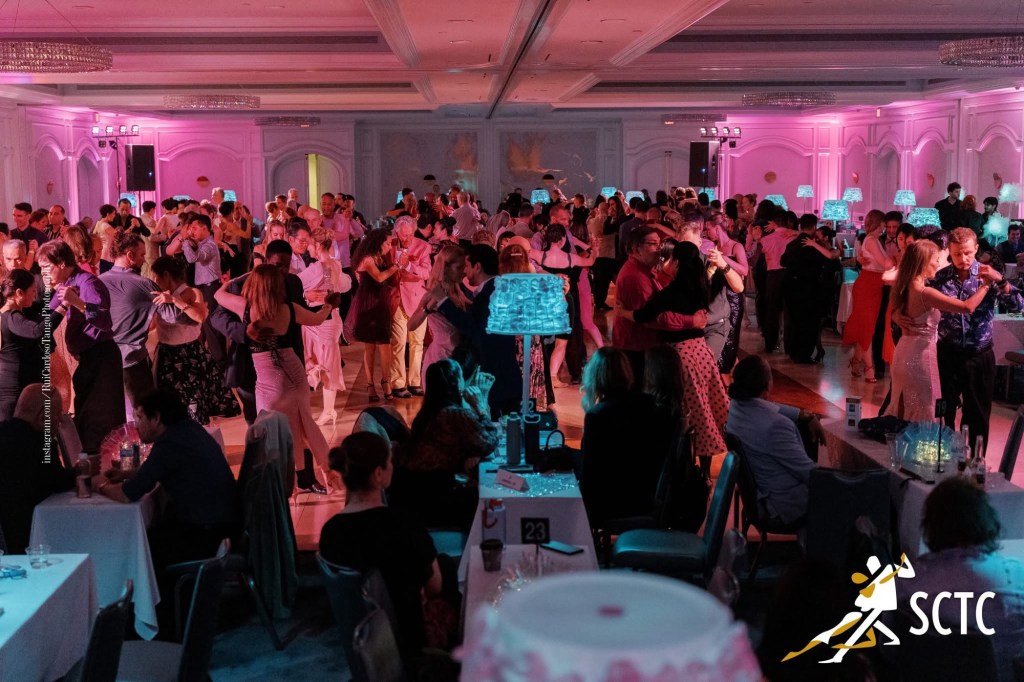
Quiero empezar por cómo me sentí durante este viaje y las reflexiones que hago.
Yo pienso que el tango es un mundo complejo en el que hay muchas capas, o layers, que no todos vemos al principio. Muchos las ignoramos completamente. De hecho, al inicio solo vemos una sola capa. Lo vemos plano, como cuando la gente creía que la tierra era plana.
Y con el tiempo —y con las experiencias— algunos empiezan a ver más.
Pero incluso dentro de esas capas, hay capas más microscópicas.
Para mí, el tango se parece mucho al cuerpo humano.
Tiene capas… está la piel, está el músculo, están las arterias, está la sangre. Pero no se queda ahí.
Dentro de la sangre hay células. Y dentro de esas células hay cosas aún más microscópicas, que uno ni siquiera ve, pero que están ahí, sosteniendo todo.
Y siento que el tango es así.
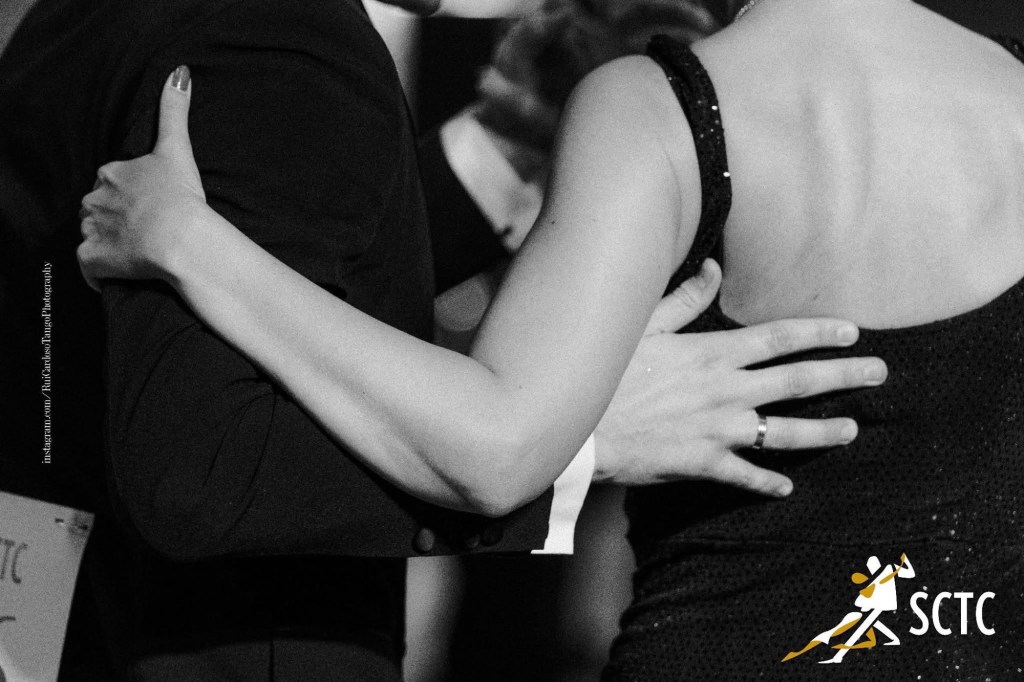
Uno al principio ve lo superficial… los pasos, las figuras, lo que se ve bonito. Pero con el tiempo empiezas a entrar. Y cuando entras, te das cuenta de que hay otra capa. Y luego otra. Y otra.
Y llega un punto en el que ya no sabes dónde termina.
O sea, es tan, tan, tan profundo… que no se trata solo de aprender, sino de desarrollar la sensibilidad para poder verlo, para poder sentirlo.
Y creo que esas capas son infinitas.
No creo que uno llegue a verlas todas nunca, por más capo del tango que se vuelva.
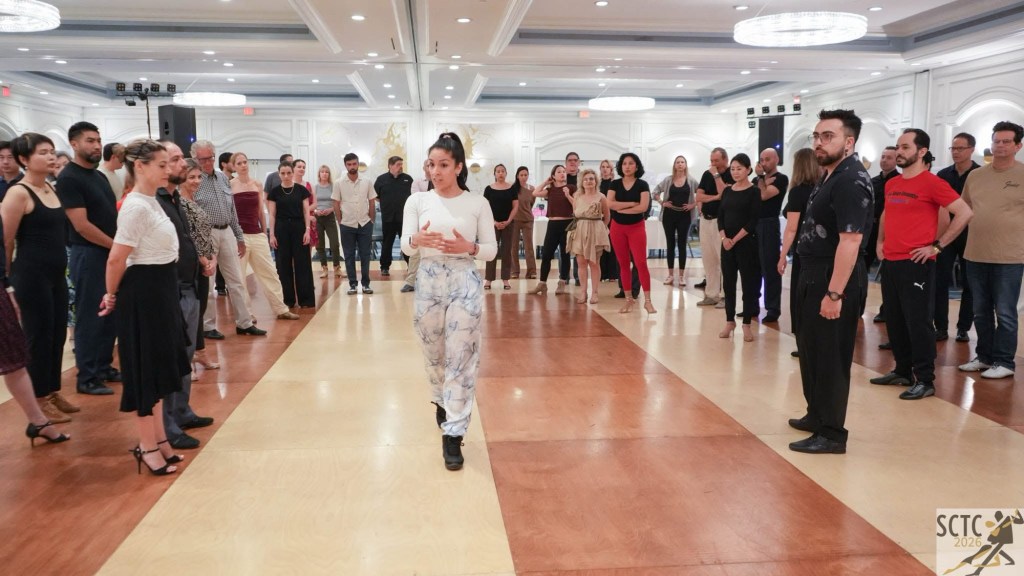
Lo digo porque en el festival estaba Octavio Fernández dando clases. Y Octavio es uno de esos maestros que no solo aprendió tango… lo vive, lo encarna.
No es tanto su edad… es todo lo que ha vivido dentro del tango.
Él aprendió con milongueros que ya no están vivos. Con gente como Portalea, el Chino Perico, Toto Faraldo, Lampazo, Julio Balmaceda, el papá de los Balmaceda… o sea, viene de una raíz muy profunda, muy real.
Y eso se le nota.
Se sube al escenario y uno no ve solo a alguien que baila bien… se le ve la trayectoria. Se le ve todo lo que ha pasado por su cuerpo, todo lo que ha absorbido, todo lo que ha vivido dentro del tango.
También quiero hacer una mención especial a algo que me marcó profundamente la segunda noche del festival. Ver a Carolina Gianni bailar junto a Octavio Fernández fue simplemente apoteósico. Su presentación fue de esas que no se olvidan: el público reaccionó con una energía increíble, la ovación fue tan intensa que tuvieron que bailar hasta cinco veces. Fue una de esas noches donde el tango trasciende lo técnico y se vuelve espectáculo, emoción pura, conexión total. Me encantó verlos juntos, y sentí una admiración enorme por la presencia, el talento y la entrega de Carolina en escena.
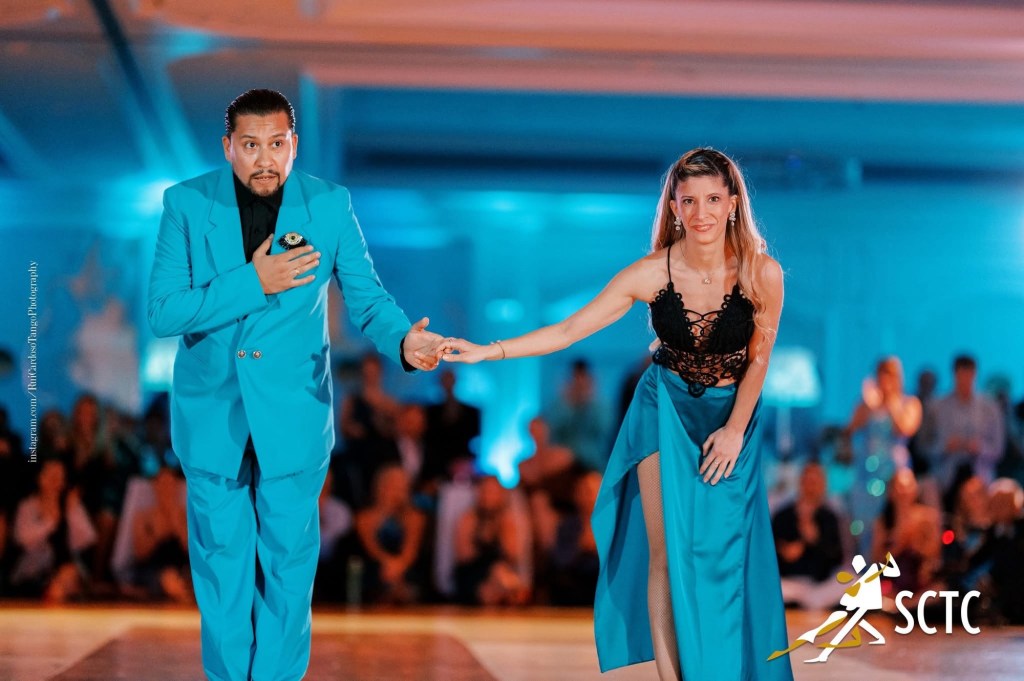
Photos by: Rui Cardoso, Don An and SoCal Tango Festival 2026
Así pues están los afortunados que pasaron por manos de los grandes maestros quienes no explicaban, ni enseñaban el tango, ellos eran el tango. Estos afortunados lograron copiar, absorber, traducir lo que esos maestros hacían y se dedicaron a replicar y transmitir ese conocimiento.
Y luego están las nuevas generaciones… talentos como Clarisa Aragón y Jonathan Saavedra, como Manuela Rossi y Juan Malizia, como Facundo Piñero y Vanesa Villalba.
Personas que han absorbido de maestros que conocieron a los milongueros como Octavio Fernández, como Fabián Peralta, y de muchos otros que han vivido ese tango transgeneracional.
Y aun así…
Volviendo al tema de las capas…
Probablemente alguien como Octavio Fernández puede ver capas microscópicas que, por más talento que tengan hoy esas nuevas generaciones, todavía no pueden ver.
No por falta de talento.
Sino por falta de tiempo vivido.
Por experiencia.
Por todo lo que hay detrás.
Y ahí es donde entendí algo:
El tango no es algo que se aprende rápido.
Ni siquiera es algo que se “domina”.
Es algo que se va revelando.
Capa por capa.
Esta es la primera parte de una serie sobre mi experiencia en el SoCal Tango Festival. En la siguiente, voy a hablar de algo de lo que casi no se habla en el tango: el miedo.
🔗 Leer también:
→ Siguiente: Bailar con miedo: lo que nadie te dice del tango
ENGLISH VERSION
Series: When art confronts you with yourself
Tango Is Not What It Seems: The Layers We Don’t See
I want to start with how I felt during this trip and the reflections that came from it.
I believe tango is a complex world with many layers that not everyone sees at the beginning. Many of us completely ignore them. In fact, at first, we only see one layer. We see it flat… like when people once believed the earth was flat.
And with time — and with experience — some people begin to see more.
But even within those layers, there are deeper, more microscopic ones.
To me, tango feels a lot like the human body.
It has layers… there’s the skin, the muscles, the arteries, the blood. But it doesn’t stop there.
Inside the blood, there are cells. And inside those cells, there are even more microscopic things that we can’t see, but they’re there, holding everything together.
And I feel like tango is the same.
At first, you only see what’s on the surface… the steps, the figures, what looks beautiful. But with time, you start going deeper. And once you go in, you realize there’s another layer. And then another. And another.
And there comes a point where you don’t even know where it ends.
It’s so, so, so deep… that it’s not just about learning, but about developing the sensitivity to see it, to feel it.
And I truly believe those layers are infinite.
I don’t think anyone ever fully sees them all, no matter how advanced they become in tango.
I say this because at the festival, Octavio Fernández was teaching. And Octavio is one of those teachers who didn’t just learn tango… he lives it, he embodies it.
It’s not about his age… it’s about everything he has lived within tango.
He learned from milongueros who are no longer alive. People like Portalea, Chino Perico, Toto Faraldo, Lampazo, Julio Balmaceda, the father of the Balmaceda family… in other words, he comes from a very deep, very real root.
And you can see it.
He steps onto the stage, and you don’t just see someone who dances well… you see his trajectory. You see everything that has gone through his body, everything he has absorbed, everything he has lived within tango.
He has lived through the era of milongueros. He witnessed the transition into what we now call social tango. He saw the rise of nuevo tango. And he has also returned to the roots…
Then come the generations who learned from them — those who passed through their hands and managed to absorb and translate what those masters did without even being able to explain it.
And then come the new generations… talents like Clarice and Jonathan, Manuela and Juan, Facundo and Vanessa.
People who have absorbed from masters like Octavio Fernández, like Fabián Peralta, and many others who have lived this transgenerational tango.
And still…
Going back to the idea of layers…
Someone like Octavio can probably see microscopic layers that, no matter how talented the new generations are today, they still can’t fully see.
Not because they lack talent.
But because they lack lived time.
Experience.
Everything that comes with it.
And that’s when I understood something:
Tango is not something you learn quickly.
It’s not even something you “master.”
It’s something that reveals itself.
Layer by layer.
This is the first part of a series about my experience at the SoCal Tango Festival. In the next one, I’ll talk about something people rarely speak about in tango: fear.
🔗 Read also:
→ Next: Dancing with Fear: What No One Tells You About Tango

