Aprendiendo juntos, un paso a la vez. Una de las experiencias más lindas que he vivido como profesora.
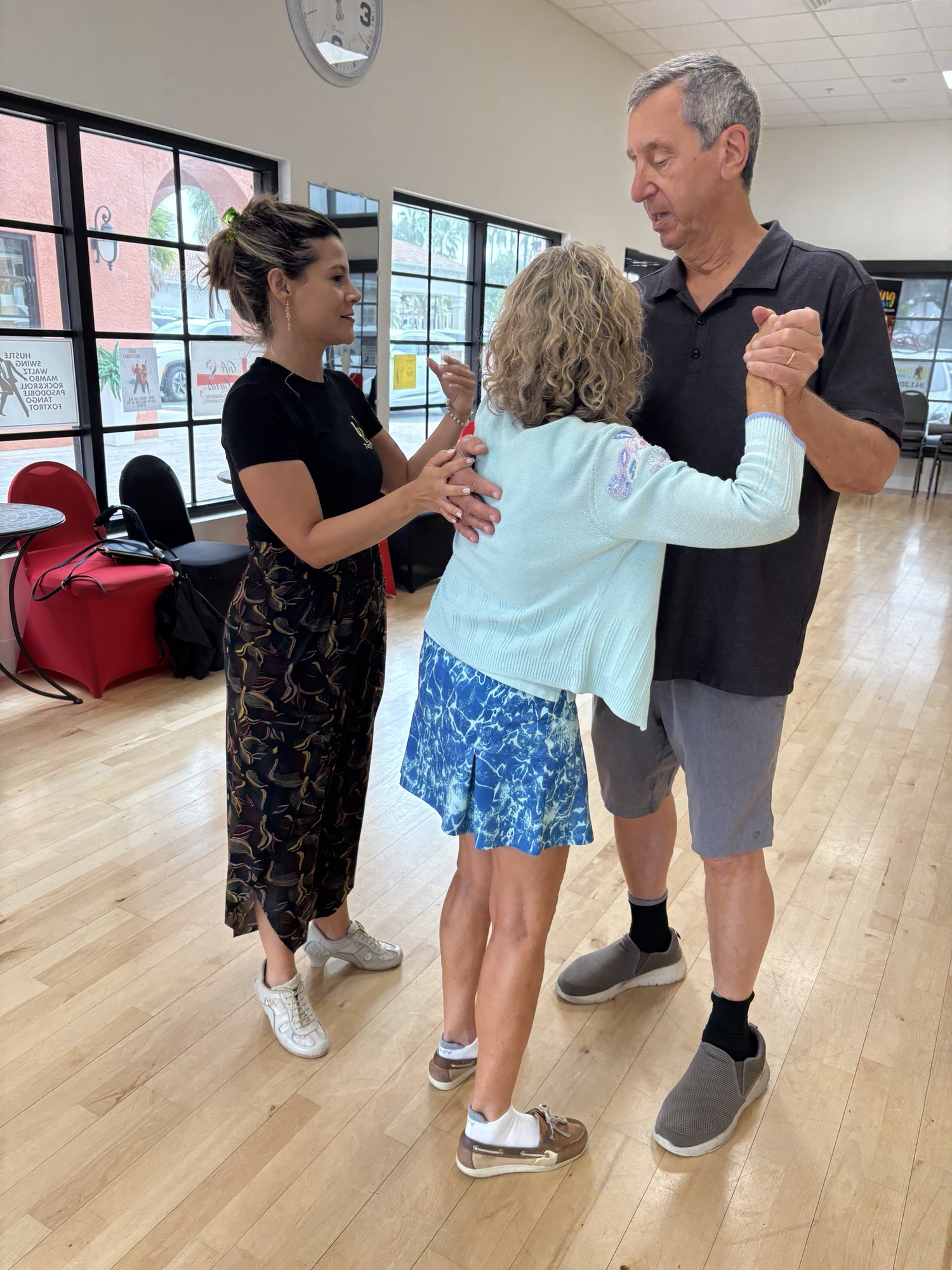
En una de nuestras clases de tango para personas con Parkinson, hicimos un ocho atrás y les dijimos a los participantes que eso era lo próximo que iban a aprender si seguían en el tango. Su reacción fue: ¡guau! Les pareció una cosa de otro mundo.
Cuando uno ya baila, un ocho puede parecer algo muy sencillo. Se vuelve paisaje, como dice uno. Pero para mí esa sorpresa es cercana. Yo sí me acuerdo de cuando aprendí un ocho, de cómo lo aprendí y de que también dije ¡guau! la primera vez.
Después, mientras estaba en el baño, me quedé pensando en eso. A lo mejor una de las razones por las que puedo enseñar tango como lo enseño es que mi proceso de aprendizaje ha sido más consciente y también más reciente.
Con la salsa me pasó algo distinto. La aprendí estando muy niña, de manera inconsciente. Entró en mi cuerpo de una forma muy natural, lo cual es muy lindo para bailar. Pero siento que no podría enseñarla como puedo enseñar tango, porque no tengo la misma conciencia de cómo la aprendí. Y no necesariamente porque baile mejor tango que salsa. No lo sé.
El tango lo he aprendido de adulta. He tenido que ser consciente de la técnica, desglosar los movimientos para entenderlos y después desglosarlos para enseñarlos. Me ha costado. Ha sido un proceso. Y creo que eso me ayuda a ser más consciente de lo que el otro necesita.
Como también es un aprendizaje más reciente, puedo recordarlo con facilidad. Es como que es más fácil recordar la juventud cuando uno todavía está joven, ¿verdad? Algo así lo veo.
Aunque yo no tengo Parkinson, sí puedo identificarme con la sorpresa de descubrir algo que antes no podía hacer. En algún momento también me sorprendí con cosas que para otros eran muy sencillas, o hasta les parecía raro que yo me sorprendiera. Por eso, cuando veo a una mujer que lleva solamente tres clases emocionarse porque ya puede hacer un ocho, entiendo esa emoción. Para mí eso es muy lindo.
Darle clases a personas con Parkinson ha sido una de las experiencias más lindas que he vivido como profesora. Y la inspiración para empezar este programa vino de Colombia.
Mi tía política tiene Parkinson desde hace nueve años y asiste a un programa de tango en la Fundación Valle del Lili, en Cali. Allí toman clases una vez a la semana con un profesor de tango, como una especie de terapia. Algunos llevan hasta dos años en el programa y ya han hecho presentaciones.
Cuando mi tía me mandó videos de su presentación, me pareció tan lindo y también sorprendente. En abril, cuando viajé a Colombia para una cirugía, tuve la oportunidad de acompañarlos a una clase, conocer a su profesor y compartir con ellos. Incluso fuimos a una milonga a bailar.
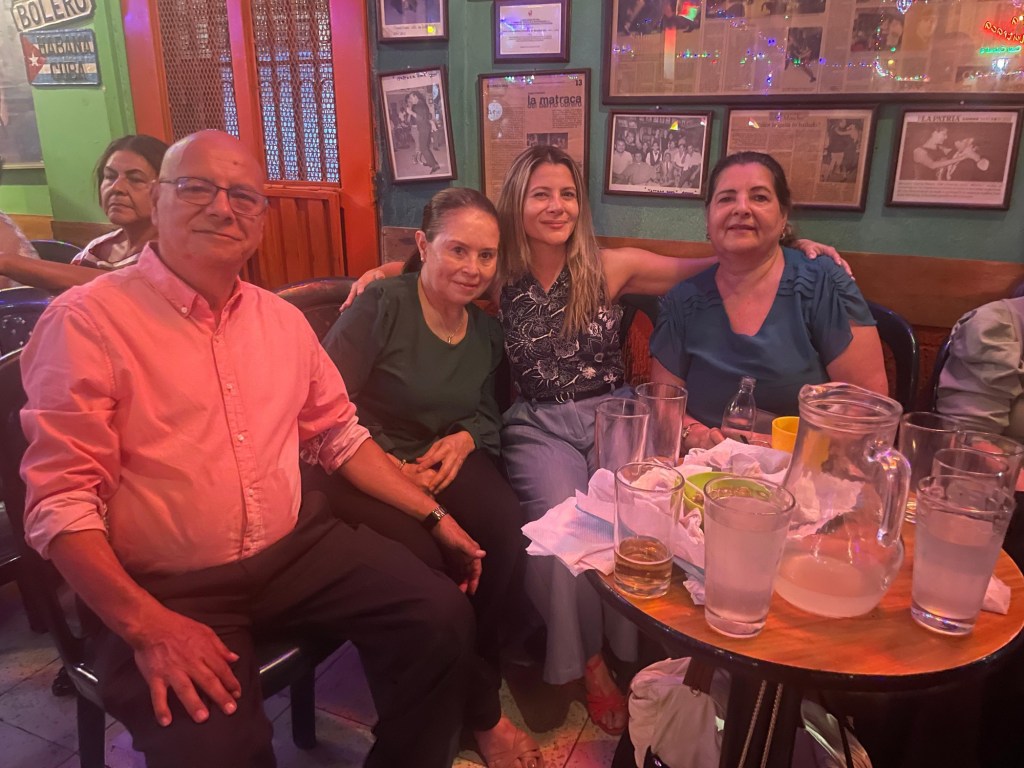
En Cali, acompañando a mi tía y a sus compañeros del programa de tango de la Fundación Valle del Lili. Aquí nació la inspiración.
Ver cómo se animan, bailan y se dan apoyo me inspiró un montón para tratar de abrir un programa así acá, en Estados Unidos.
Uno de los compañeros de mi tía, que también tiene Parkinson, escribe muy lindo. Me inspiró leer cómo escribe sobre su enfermedad y sobre el tango: cómo lo ha ayudado con su equilibrio y su movimiento, y cómo le llena el corazón ir a las clases, conectar con su pareja y mover su cuerpo.
Recuerdo que en algunos de sus escritos decía que la enfermedad se quedaba en casa una vez empezaban a bailar. Eso me parece tan lindo. Al acompañarlos, también me sorprendió observar momentos en los que dejaban de temblar mientras bailaban.
El tango es de conexión y de caminar. Para empezar no hace falta ningún talento especial: conectar, escuchar la música y concentrarse en los movimientos.
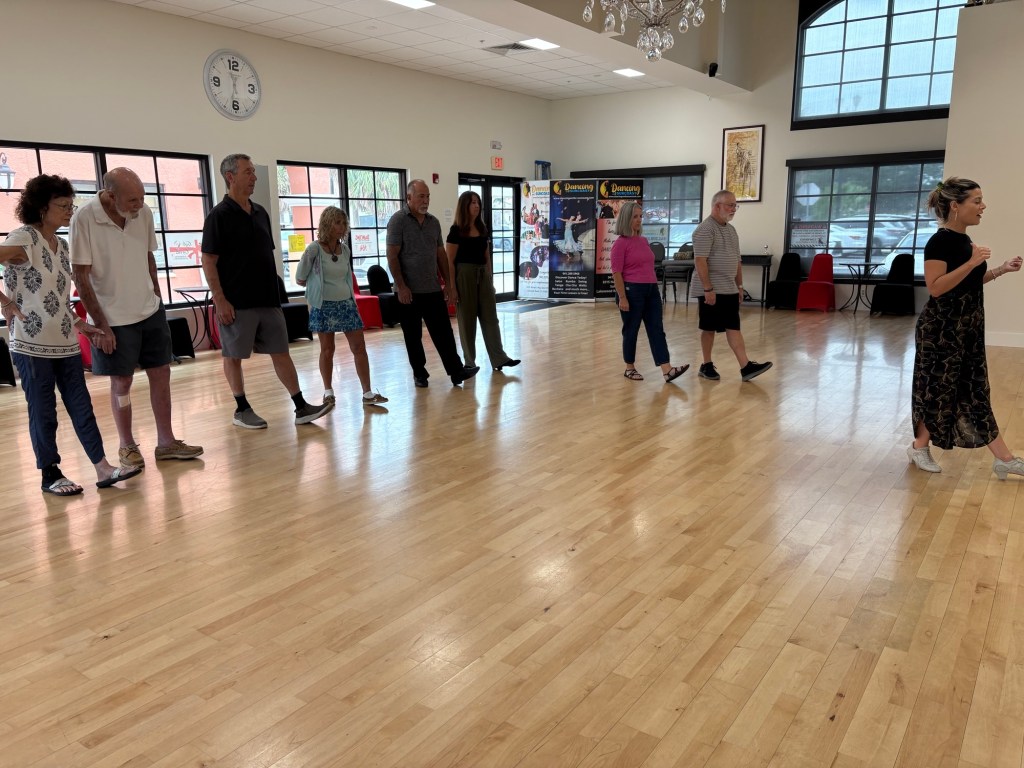
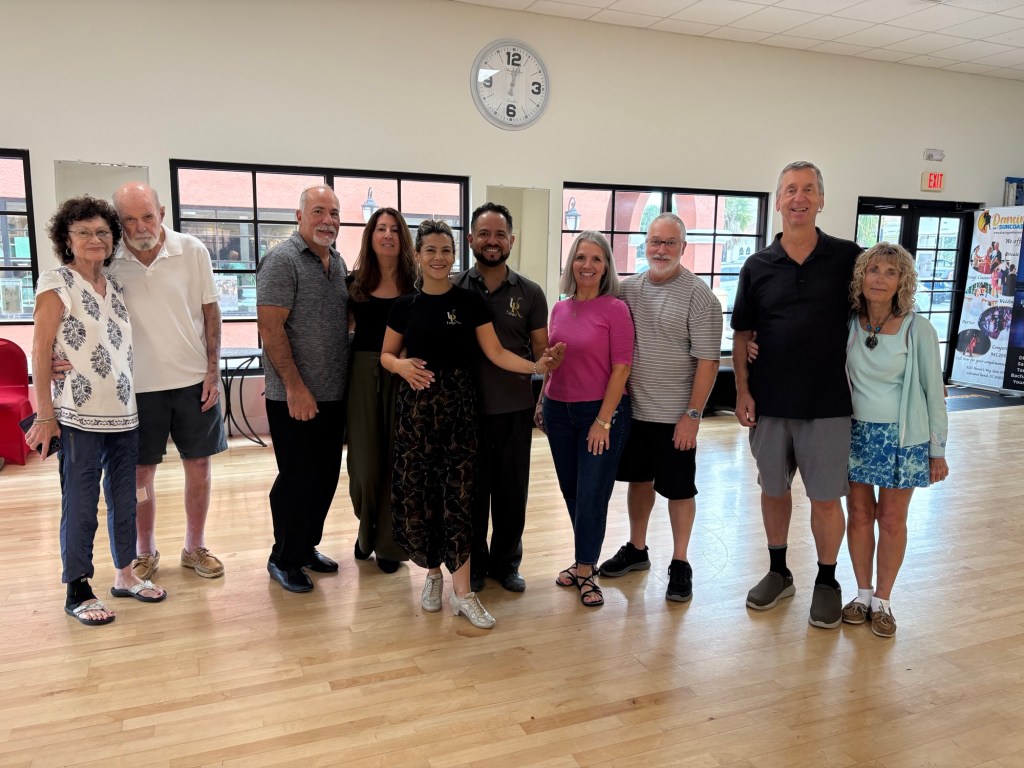
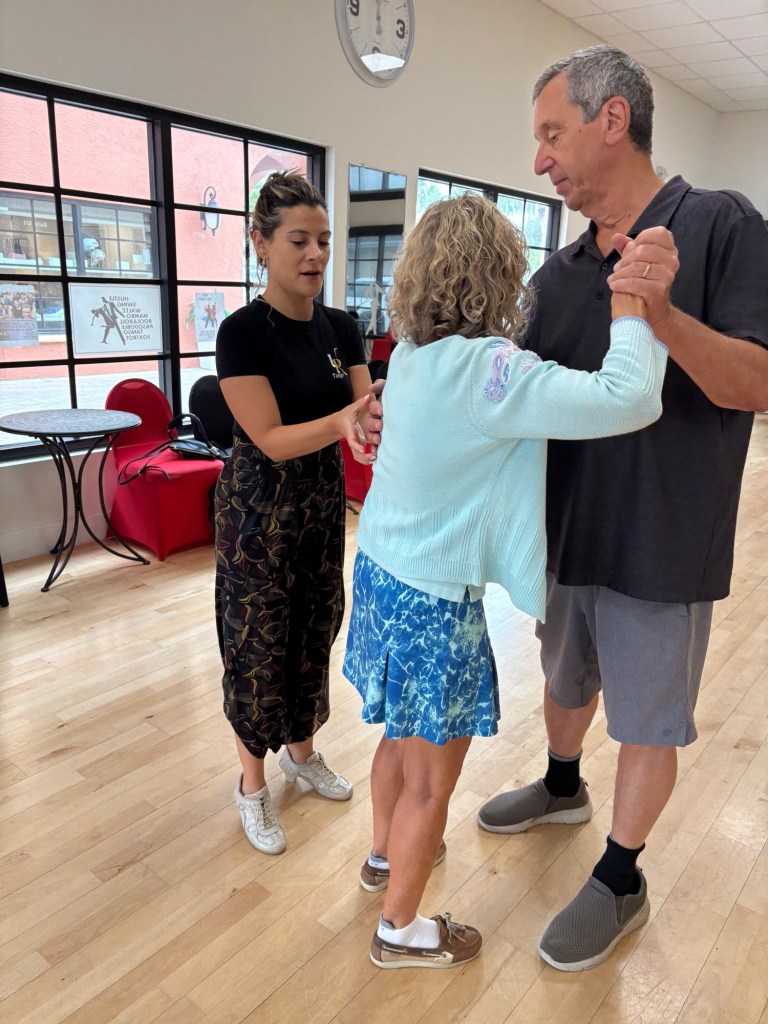
Compartiendo el tango con los participantes de nuestro programa piloto de UR Tango junto a Neuro Challenge.
Me siento orgullosa de haberle propuesto el programa a Neuro Challenge Foundation for Parkinson’s, en Sarasota, y de que nos hayan aceptado realizar este piloto con UR Tango. Creo que hemos aprendido incluso nosotros más de ellos que ellos de nosotros.
Quisiéramos poder continuarlo y que fuera realmente un programa bandera de UR Tango.
Me parece muy lindo poder vivir el proceso con ellos también. Ver su sorpresa ante un ocho, recordar la mía y compartir esa emoción. Para mí es muy lindo.
Más información: Calendario de programas de Neuro Challenge · UR Tango
English Version
Sharing What I’ve Learned and Remembering What It Feels Like to Learn
During one of our tango classes for people with Parkinson’s, we did a back ocho and told the participants that this was what they would learn next if they continued with tango. Their reaction was: wow! To them, it seemed like something out of this world.
Once you dance tango, an ocho can seem very simple. It becomes something you barely notice anymore. But that sense of wonder still feels familiar to me. I remember learning an ocho, how I learned it, and how I also said “wow!” the first time.
Later, while I was in the bathroom, I kept thinking about it. Maybe one of the reasons I can teach tango the way I do is that my learning process has been more conscious and also more recent.
Salsa was different for me. I learned it when I was very young, without being conscious of the process. It became part of my body so naturally, which is beautiful when it comes to dancing. But I feel that I couldn’t teach it the way I teach tango, because I don’t have the same awareness of how I learned it. And that’s not necessarily because I dance tango better than salsa. I don’t know.
I learned tango as an adult. I’ve had to pay attention to technique, break down the movements to understand them, and then break them down again to teach them. It hasn’t been easy for me. It’s been a process. And I think that helps me be more aware of what someone else needs.
Because I learned it more recently, it’s also easier to remember. It’s like how it’s easier to remember being young when you’re still young, right? That’s sort of how I see it.
Although I don’t have Parkinson’s, I can relate to the surprise of discovering something I couldn’t do before. There was a time when I, too, was amazed by things that seemed very simple to others. Some people even seemed to find it strange that I was so surprised. So when I see a woman who has taken only three classes get excited because she can already do an ocho, I understand that feeling. To me, that’s beautiful.
Teaching people with Parkinson’s has been one of the most beautiful experiences I’ve had as a teacher. And the inspiration for starting this program came from Colombia.
My aunt by marriage has had Parkinson’s for nine years and attends a tango program at Fundación Valle del Lili in Cali. They take a class once a week with a tango teacher, as a kind of therapy. Some have been in the program for as long as two years and have already performed.
When my aunt sent me videos of her performance, I found it so beautiful and also surprising. In April, when I traveled to Colombia for surgery, I had the chance to join them for a class, meet their teacher, and spend time with them. We even went to a milonga to dance.
Seeing how they encourage one another, dance, and support each other really inspired me to try to start a program like that here in the United States.
One of the other participants, who also has Parkinson’s, writes beautifully. I was inspired by his writing about his illness and about tango: how it has helped his balance and movement, and how going to class, connecting with his partner, and moving his body fills his heart.
I remember that in some of his writing, he said the illness stayed at home once they started dancing. I find that so beautiful. While spending time with them, I was also surprised to notice moments when they stopped trembling as they danced.
Tango is about connection and walking. You don’t need any special talent to get started: connect, listen to the music, and focus on the movements.
I feel proud that I proposed the program to Neuro Challenge Foundation for Parkinson’s in Sarasota, and that they agreed to offer this pilot with UR Tango. I think we may have learned even more from them than they have from us.
We would love to continue it and make it a flagship program for UR Tango.
I find it so beautiful to share that process with them, too. To see their amazement at an ocho, remember my own, and share that feeling. To me, that’s beautiful.
More information:
Neuro Challenge’s Program Calendar · Learn More About UR Tango

