Tercera parte de una serie sobre mi experiencia en el SoCal Tango Festival 2026.
Hay algo que nadie te prepara para vivir en el tango.
La frustración.
No la de un mal paso.
No la de equivocarte en una figura.
Sino esa frustración más silenciosa… más constante.
La que aparece cuando te comparas.
Cuando te sientes observada.
Cuando sientes que no estás a la altura.
Y eso duele.
Yo he sentido eso muchas veces.
Pero en este festival lo sentí más fuerte.
Más claro.
Más inevitable.
Y no fue tanto en las clases.
Curiosamente, en las clases me sentía más tranquila.
Ahí éramos dos estudiantes.
Ahí no importaba tanto quién era quién afuera.
La frustración venía en las noches.
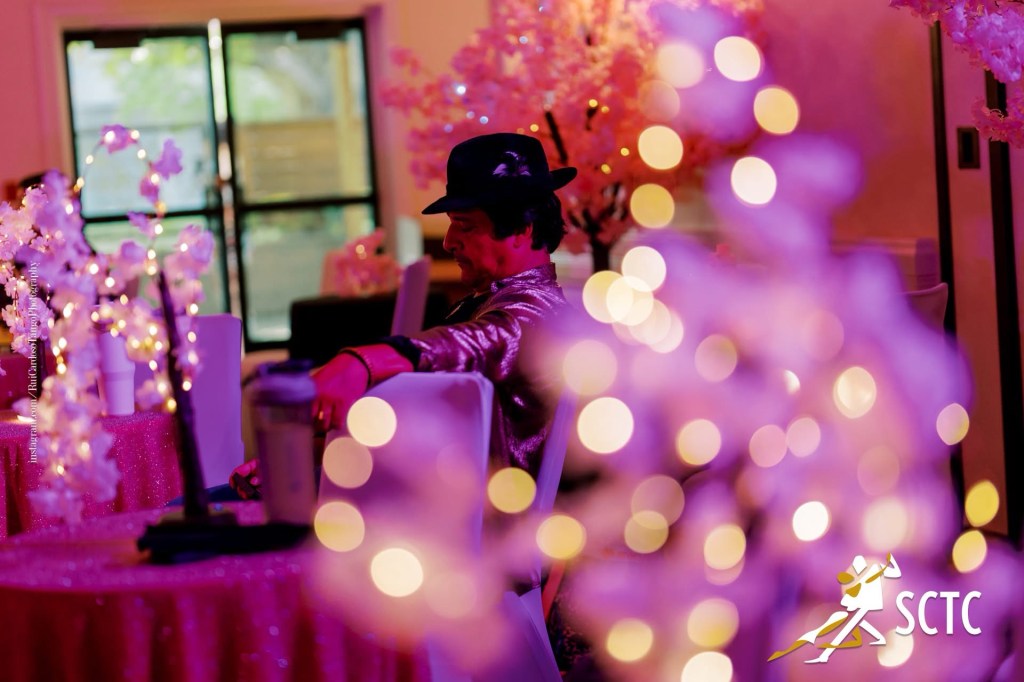
En las milongas.
Sintiendo todas esas miradas.
Sintiendo el peso de estar ahí.
Sintiendo que tenía que demostrar algo… aunque nadie me lo estuviera pidiendo directamente.
Y cuando salía a bailar…
Mi cuerpo cambiaba.
Me ponía tensa.
Me equivocaba más.
Me desconectaba.
No porque no pudiera hacerlo.
Sino porque mi cabeza estaba en otro lado.
Y ahí fue donde entendí que la frustración no siempre viene de no saber.
A veces viene del miedo.
De la presión.
De la comparación.
Recuerdo que después de una clase, me acerqué a Clarisa Aragón y a Jonathan Saavedra.
Yo venía cargando todo eso.
La pena de bailar en las milongas.
El miedo a ser observada.
La inseguridad.
Y les pregunté algo muy simple:
¿Cómo hago para no sentirme tan intimidada?
Porque no es solo bailar.
Es bailar con alguien como Carlos Urrego.
Es saber quién es.
Es saber lo que ha hecho.
Es saber el nivel en el que está.
Y estar ahí, al lado de él, en una milonga, con todo el mundo mirando…
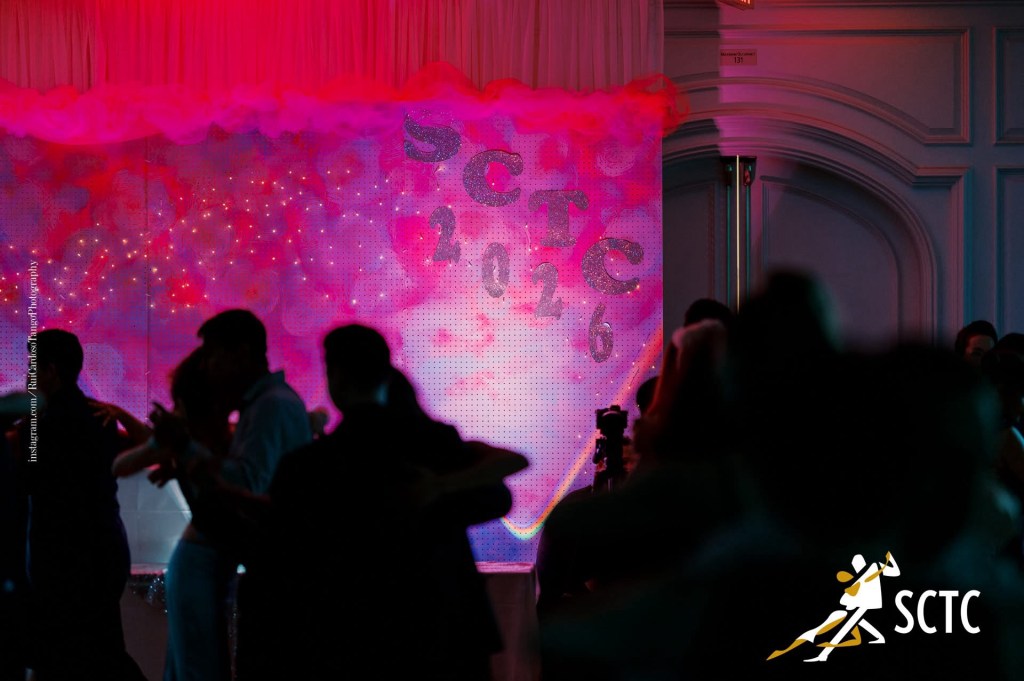
Eso pesa.
Y su respuesta fue tan sencilla… pero tan necesaria.
Me dijeron que ellos no estaban ahí para juzgar.
Que era una milonga.
Que había que disfrutar.
Jonathan dijo algo que se me quedó:
“Ustedes están bailando por amor.”
Y eso me movió.
Porque en medio de tanta presión, tanta comparación, tanto ruido…
Se me había olvidado eso, la magia entre los dos, el amor que sentimos el uno por el otro. Eso que nació el día que bailamos por primera vez.
Y entonces Clarisa me dijo algo que no esperaba.
Me contó que, apenas tres semanas atrás, dura te un ensayo con Jonathan, no podía bailar. No podía moverse. No le salía nada. Y la frustración fue tan grande que terminó llorando.
En ese momento yo también empecé a llorar.
Porque me vi ahí.
Me vi en esa sensación de no poder, de sentir que el cuerpo no responde, de frustrarse en silencio.
Y al mismo tiempo entendí algo que me desarmó por completo: no soy la única.
A veces uno cree que eso solo nos pasa a los que estamos empezando. Que a ellos —a los que admiramos, a los profesionales, a los campeones— no les pasa.
Pero sí les pasa.
Personas como ellos, que han sido campeones mundiales, que llevan años bailando, que tienen una trayectoria enorme, también se frustran, también se bloquean, también tienen días donde nada sale.
Y eso me dio algo muy profundo: valor.
Porque me quitó la idea de que yo estaba “mal” por sentir lo que sentía.
Me dijeron algo que se me quedó grabado: que disfrutara el proceso. Que a ellos les hubiera gustado haberlo hecho más.
Y no era la primera vez que lo escuchaba
No estaba ahí para demostrar nada.
No estaba ahí para ser perfecta.
No estaba ahí para compararme.
Estaba ahí porque quiero bailar.
Porque lo siento.
Porque me hace feliz.
Y entonces algo empezó a cambiar.
No de un momento a otro.
Pero sí lo suficiente.
Empecé a entender algo que hasta ese momento no había logrado aterrizar del todo.
Cuando todos me decían:
“Disfruta el proceso.”
Carlos me lo dice todo el tiempo.
Cristina Sosa me lo dijo en Miami.
Y ahora lo escuchaba de ellos también.
Pero no es lo mismo escucharlo que vivirlo.
Y creo que en ese momento empecé a vivirlo un poco más.
A soltar un poco la presión.
A dejar de pelear con lo que estaba sintiendo.
Porque la frustración no siempre significa que no puedes.
A veces solo significa que estás demasiado en tu cabeza.
Y poco a poco…
Empecé a volver al cuerpo.
A confiar.
A respirar.
A quedarme.
Porque al final…
No se trata de hacerlo perfecto.
No se trata de hacerlo rápido.
No se trata de compararte.
Se trata de quedarte.
De seguir.
De atravesarlo.
🔗 Leer también:
← El tango no es lo que parece: las capas que no vemos
← Bailar con miedo: lo que nadie te dice del tango
→ Siguiente: Elegir quedarme: lo que realmente me dejó este festival
ENGLISH VERSION
Series: When art confronts you with yourself
When the Process Hurts: Frustration, Comparison, and Truth
Part three of a series about my experience at the SoCal Tango Festival.
There’s something no one prepares you for in tango.
Frustration.
Not the kind that comes from a wrong step.
Not from missing a figure.
But a quieter, more constant frustration.
The kind that appears when you compare yourself.
When you feel observed.
When you feel like you’re not enough.
And that hurts.
I’ve felt that many times.
But in this festival, I felt it more strongly.
More clearly.
More inevitably.
And interestingly… it wasn’t during the classes.
In the classes, I felt calmer.
We were just two students.
It didn’t matter who we were outside.
The frustration came at night.
At the milongas.
Sitting at a table with professionals, champions, people who have dedicated their lives to tango…
Feeling those looks.
Feeling the weight of being there.
Feeling like I had to prove something… even if no one was explicitly asking me to.
And when I stepped onto the dance floor…
My body changed.
I got tense.
I made more mistakes.
I disconnected.
Not because I couldn’t do it.
But because my mind was somewhere else.
And that’s when I understood something.
Frustration doesn’t always come from not knowing.
Sometimes it comes from fear.
From pressure.
From comparison.
I remember that after a class, I approached Clarisa and Jonathan.
I was carrying all of this.
The shame of dancing in the milongas.
The fear of being seen.
The insecurity.
And I asked them something simple:
How do I stop feeling so intimidated?
Because it’s not just dancing.
It’s dancing with someone like Carlos.
It’s knowing who he is.
What he has done.
The level he’s at.
And being there, next to him, in a milonga, with everyone watching…
That carries weight.
Their answer was simple… but exactly what I needed.
They said they weren’t there to judge.
That it was a milonga.
That it was meant to be enjoyed.
And Jonathan said something that stayed with me:
“You’re dancing for love.”
And that shifted something.
Because in the middle of all the pressure, comparison, and noise…
I had forgotten that—the magic between the two of us, the love we feel for each other. That feeling that was born the day we danced together for the first time.
And then Clarisa told me something I wasn’t expecting.
She shared that just two weeks before, she couldn’t dance. She couldn’t move. Nothing was working. And the frustration became so overwhelming that she ended up crying.
In that moment, I started crying too.
Because I saw myself in her.
I saw myself in that feeling of not being able to do it, of feeling like your body just doesn’t respond, of silently falling into frustration.
And at the same time, I understood something that completely broke something open in me: I am not the only one.
Sometimes we think this only happens to those of us who are just starting. That the people we admire—the professionals, the champions—don’t go through this.
But they do.
People like them, who have been world champions, who have been dancing for years, who have such an extensive trajectory, also get frustrated, also get blocked, also have days when nothing works.
And that gave me something very deep: courage.
Because it removed the idea that there was something “wrong” with me for feeling the way I felt.
They told me something that stayed with me: to enjoy the process. That they wished they had done it more.
And it wasn’t the first time I had heard it.
I wasn’t there to prove anything.
I wasn’t there to be perfect.
I wasn’t there to compare myself.
I was there because I want to dance.
Because I feel it.
Because it makes me happy.
And something started to change.
Not instantly.
But enough.
I started to understand something I hadn’t fully grasped before
When people kept telling me:
“Enjoy the process.”
Carlos tells me all the time.
Cristina Sosa told me in Miami.
And now I was hearing it from them too.
But hearing it is not the same as living it.
And I think in that moment, I started to live it a little more.
To release some of the pressure.
To stop fighting what I was feeling.
Because frustration doesn’t always mean you can’t.
Sometimes it just means you’re too much in your head.
And little by little…
I came back to my body.
To trust.
To breathe.
To stay.
Because in the end…
It’s not about doing it perfectly.
It’s not about doing it fast.
It’s not about comparing yourself.
It’s about staying.
Continuing.
Going through it.
🔗 Read also:
← Tango Is Not What It Seems: The Layers We Don’t See

